
I have always been jealous when I hear an artist say, “I have a new piece”, or words to that effect. As a photographer I never have a new piece. I have new images or new photos but not pieces. For 10 plus years I have been make photobooks and zines out of my images. But, I couldn’t really call a photobook a “piece”.
A few months ago (maybe a year ago) I was printing out some images on a Canon Selphy printer. They make really good 4″ x 6″ dye sublimation prints. I was experimenting trying to see what I could do with the prints. In my bedroom was a small box of photo frames my wife found in the attic. I decided to try and frame one of my images in one of the frames that I really liked. The frame itself was in good condition but was a little dusty and dirty. I thought that might lend something to the entire enterprise.

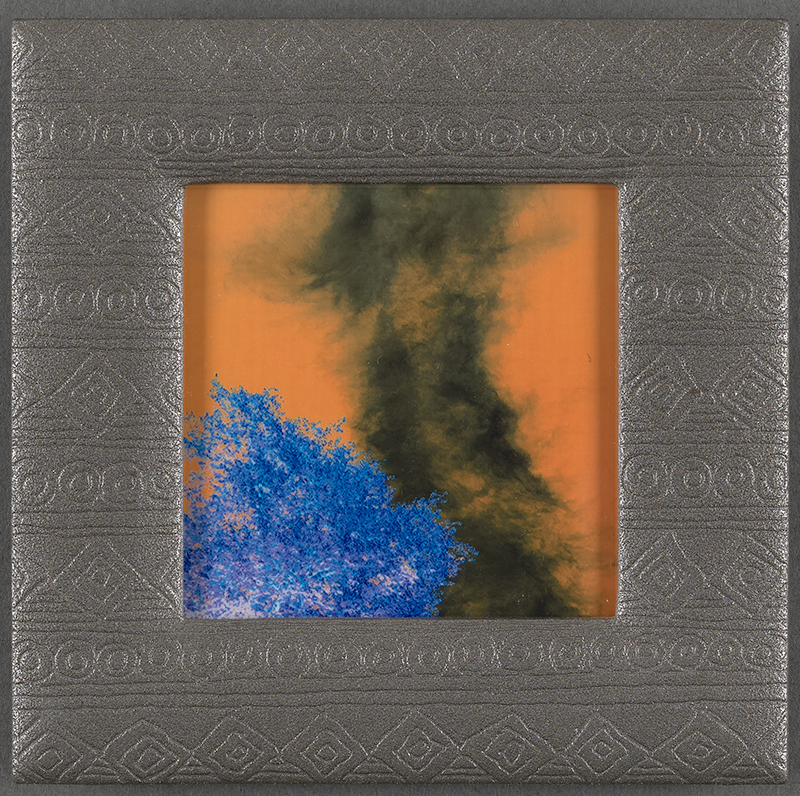
This was it. My first piece! I really liked how the image and the frame (and the dirty glass) spoke to each other. A few weekends ago my wife and I went to a rummage sale and came upon a table with lots of small frames. I tried to find the most unique looking frames. Later I started pairing some of my photos with the frames as I had done earlier with the ones from the attic. My favorite so far is the piece on top. The image comes from the Color Switch series (Yellow Becomes Blue).
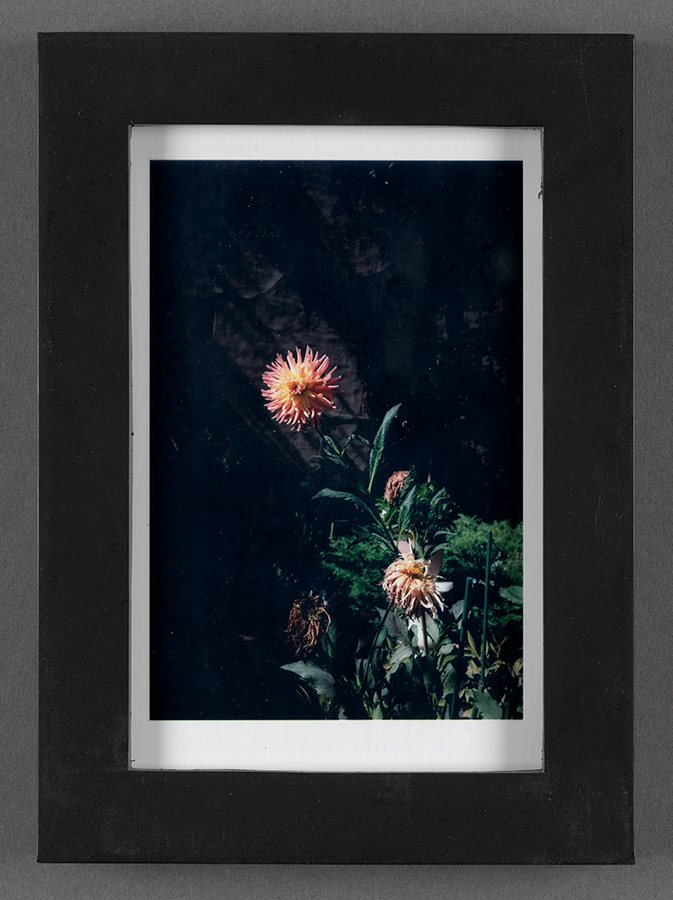
As I look at the collection of pieces so far it reminds me of how the Japanese artist Masao Yamamoto presents his work. Yamamoto makes small prints that are very metaphysical and contemplative. He the arranges them directly on the wall of the gallery making constellations of images. Maybe I can do something similar with my small pieces.

I can’t wait to see how these pieces will evolve over time. I think this new practice is my reaction to the over production of “photobooks” in this day and age. Every photographer wants a book and I have to admit that I have seen a lot of photobooks that I am not sure had to be made or should have been made. Don’t get me wrong, I am not saying not to make photobooks. If that is what your souls is telling you need to do then by all means do it. At this point I would rather make little pieces of art.
 Force Of Seeing